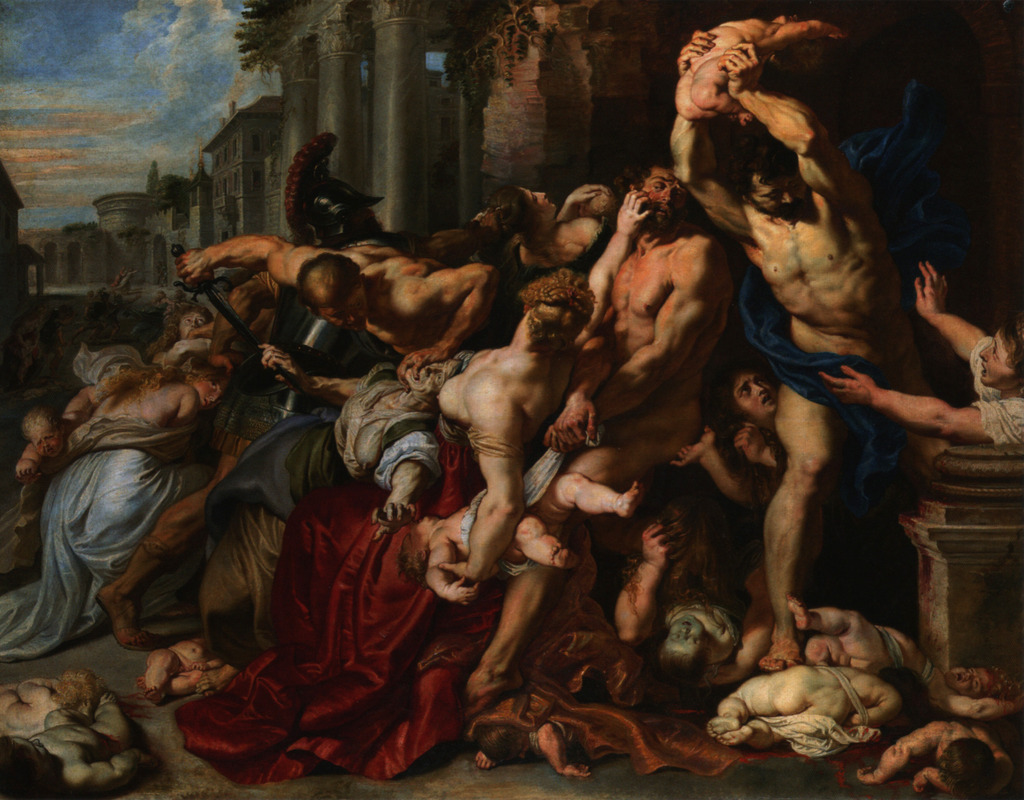
Bodies twisted. Writhing, reaching, compressed to one another. No separation of limbs, just one leg attached to another, and to another, and to a torso, sometimes a head. She often paints like this, in fluid motions of forms. I’ve heard it said, she captures movement like a master. True, she is good. Each brush stroke planned for the effect of the viewer—but never for the viewed.
I am tired. Tired of stretching out my arms, of sharing a leg. Tired of the head that is thrust into my crotch. I suppose my pained oil expression is fitting, but even the agony on my eyebrows exhausts me.
Across the room there is a lovely landscape. It is a twilight scene, with mellow shades of purple and salmon; and a rippling lake where dances the light from a waning moon. You can tell it is waning, because again, she is a master of movement, and this moon appears to be retreating even from itself. Admirers never look at that painting. They call it dull. Probably something from her early days, they say… like a child who when first learning to rhyme, writes every poem in sing-songy ignorance.
Whatever. I disagree with these critics. I think the painting is there to give us all a break from the torture of permanent postures—backs erect, or slumped, spines mildly curved, or impossibly angular; hungry hands, sometimes splayed, sometime grasping skirts, or air, or pulling at hair and faces… sometimes missing altogether; melted faces of frowns, and gapes, and muted anguish… or resignation. Cruel sable strokes that hold us captive. All for the connoisseur, who’s weighty ramblings assign appropriate meaning to the exposed breasts, savagely consumed by dirt or flames or beasts or mouths.
Yes, she is a master of movement, and so her punishment is constant and fluid.
That is why the landscape is there. She knows well what she’s done, and yet cannot help what she is. So she places it alone…not juxtaposed to the rest of us, but absolutely opposite. A salvation of 72 x 48… just out of reach.
 K. Banks